1.1
Primes, Prime Factorisation and Index Notation
We learnt about multiples and factors previously.
AMultiples
We can find the multiples of a whole number by multiplying it by another positive whole number.
Example:
The multiples of 3 are $3 \times 1, \; 3 \times 2, \; 3 \times 3, \; 3 \times 4, \; 3 \times 5, \; \ldots$
i.e., $\;3, \;6, \;9, \;12, \;15, \;\ldots$
BFactors
0, 1, 2, 3, 4, ... are whole numbers. A whole number greater than 1 can be expressed as a product of two whole numbers.
Example:
1, 2, 3, 4, 6 and 12 are called the factors of 12 and 12 is divisible by each of its factors.
Do you see the link between multiples and factors?
-
(a)(i) Is 5 a factor of 10? Why?
(a)(ii) Is 3 a factor of 10? Why?
(b) Can a whole number greater than 10 be a factor of 10? Give your reasons.看完答案,自评:
CPrime Numbers and Composite Numbers
Activity 1Objective: To classify whole numbers based on the number of factors.
-
(a) Complete the table by listing the factors of 2 to 12. Some examples are given below.
Number Product(s) Factors 2 $2 = 1 \times 2$ 1, 2 3 4 $4 = 1 \times 4$
$= 2 \times 2$1, 2, 4 5 6 7 8 9 $9 = 1 \times 9$
$= 3 \times 3$1, 3, 9 10 11 12 $12 = 1 \times 12$
$= 2 \times 6$
$= 3 \times 4$1, 2, 3, 4, 6, 12 答错的空 → 点红色 ✗ 获取分级提示(b) Complete the table by grouping the numbers 2 to 12 according to the number of factors they have. 2 and 4 are done for you.
Number of factors Numbers Two factors 2,More than two factors 4, -
Look at the numbers with only two factors. What do you observe about the factors of these numbers?
看完答案,自评:
From Activity 1, we observe the following.
- A whole number greater than 1 can be classified either as a prime number or a composite number.
- A prime number has only two factors, 1 and itself.
- A composite number has more than two factors.
Note that 0 and 1 are neither prime numbers nor composite numbers.
-
Explain why 0 and 1 are not prime numbers.
看完答案,自评: -
Can a whole number be both a prime number and a composite number? Why?
看完答案,自评:
To determine whether a number is a prime, we can check if the number is divisible by all the prime numbers smaller than itself.
If a number (e.g., 90) is divisible by a composite number (e.g., 18), then it is divisible by all the prime numbers which are the factors (e.g., 1, 2, 3, 6, 9, 18) of this composite number.
Determine whether each of the following is a prime or a composite number.
(a) 143 (b) 29
(a) Check if 143 is divisible by any prime number smaller than 143, such as 2, 3, 5, 7, 11, ...
$143 \div 11 = 13$
$\therefore$ 143 is a composite number because it has more than two factors.
(b) Check if 29 is divisible by any prime number smaller than 29.
29 is not divisible by any prime number smaller than itself.
$\therefore$ 29 is a prime number because it has only two factors, 1 and itself.
Determine whether each of the following is a prime or a composite number.
(a) 234 → (b) 171 → (c) 31 →
-
Show that the following numbers are composite numbers.
(a) 135 (b) 485 (c) 920 (d) 2320
(e) 72 (f) 134 (g) 836 (h) 7128 -
Using the results in 1, how can we make use of the last digit of a number to show that it is a composite number?
看完答案,自评:
DPrime Factorisation
Let us consider the composite number 30. Expressing 30 as the product of its prime factors (factors which are prime numbers), we have:
We say that 2, 3 and 5 are the prime factors of 30.
Activity 2Objective: To express a whole number greater than 1 as a product of its prime factors.
-
(a) Copy the following and fill in the blanks. The first one has been done for you as an example.
(i)(ii)(b) Hence express 10 and 28 as a product of their prime factors. The first one has been done for you as an example.
(i) $10 = 2 \times 5$
(ii) $28 = $
-
(a) Copy and complete the factor trees.
Factor Tree 1Factor Tree 2Factor Tree 3(b) Using each of the factor trees, write down 280 as the product of its prime factors.
Factor Tree 1: $280 = $
Factor Tree 2: $280 = $
Factor Tree 3: $280 = $
(c) What can you say about the products in question 2(b)?
看完答案,自评:
From Activity 2, we can see there is more than one way to begin the process of expressing a number as the product of its prime factors such as:
$280 = 10 \times 28, \quad 280 = 2 \times 140, \quad 280 = 4 \times 70, \;\ldots$
Whichever expression we choose to start with, we get the same product of prime factors for 280.
$280 = 2 \times 2 \times 2 \times 5 \times 7$
More importantly, rearranging the order of these prime factors also gives the same value, 280.
- Every whole number greater than 1 is either a prime number or it can be expressed as a unique product of its prime factors.
- The process of expressing a composite number as a product of its prime factors is called prime factorisation.
Express 126 as the product of its prime factors.
Method 1: Factor Tree
We can build a factor tree as follows:
STEP 1
STEP 2
STEP 3
Written as the product of its prime factors,
$126 = 2 \times 3 \times 3 \times 7$.
Method 2: Successive Short Division
The prime factorisation is the product of all the divisors.
$\therefore 126 = 2 \times 3 \times 3 \times 7$
Express 585 as the product of its prime factors using
(a) a factor tree, (b) the successive short division method.
Answer: $585 = $
(a) If you are asked to express 360 as the product of its prime factors using the successive short division method, which number will you start with? Why?
(b) Do you think it is a good strategy to start the division process using the smallest prime factor? Why?
EIndex Notation
In Activity 2, we obtained $280 = 2 \times 2 \times 2 \times 5 \times 7$. We see that there is a product of three '2's. We can use notation to 'shorten' this as $2^3$. Thus, we have $280 = 2^3 \times 5 \times 7$.
$2 \times 2 \times 2 = 2^3$, which is read as '2 to the power of 3' or '2 cubed'.
This notation is called index notation. The number 2 is the base and the number 3 is the index. The index shows the number of times the base is multiplied by itself.
Similarly,
$2 \times 2 = 2^2$, which is read as '2 to the power of 2' or '2 squared' and
$2 \times 2 \times 2 \times 2 = 2^4$, which is read as '2 to the power of 4'.
We can use index notation to express the prime factorisation of a number in a more concise manner.
Express 720 as the product of its prime factors in index notation.
Method 1: Factor Tree
$\therefore 720 = 2 \times 5 \times 3 \times 3 \times 2 \times 2 \times 2$
$\quad\quad\;\; = 2^4 \times 3^2 \times 5 \quad$ (index notation)
Method 2: Successive Short Division
$\therefore 720 = 2 \times 2 \times 2 \times 2 \times 3 \times 3 \times 5$
$\quad\quad\;\; = 2^4 \times 3^2 \times 5 \quad$ (index notation)
Express 702 as the product of its prime factors in index notation.
Answer: $702 = $
(a) 85 → (b) 83 →
(c) 103 → (d) 323 →
(a) $8 \times 8 \times 8 = $
(b) $3 \times 3 \times 3 \times 3 \times 3 = $
(c) $7 \times 7 \times 9 = $
(d) $4 \times 4 \times 6 \times 6 = $
(e) $2 \times 3 \times 11 \times 11 \times 11 = $
(f) $5 \times 5 \times 13 \times 5 \times 13 \times 37 = $
(a) $54 = $
(b) $72 = $
$784 = $
$4851 = $
$6125 = $
(a) $180 = $
(b) $616 = $
(c) $735 = $
(d) $1350 = $
(a) the smallest prime factor of 377 →
(b) the largest multiple of 17 that is less than 1000 →
(c) the smallest multiple of 19 that is greater than 500 →
(b) Write down the first ten multiples of 3.
(c) Hence write down the first three multiples common to 2 and 3.
(d) From your answer in (c), what can you say about multiples common to 2 and 3?
(a) If 6 is a factor of a number, then 3 is a factor of the number. (b) If 2 and 7 are factors of a number, then 14 is a factor of the number. (c) If 2 and 8 are factors of a number, then 16 is a factor of the number.
(b) Complete the factor tree.
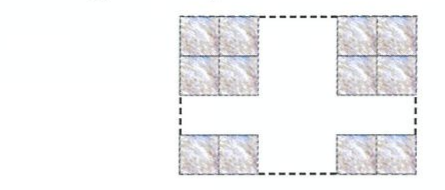
(a) 18 tiles →
(b) 41 tiles →
 A lock can only be opened using a 3-digit number. Jinlan sets this 3-digit number to be the smallest prime number greater than 100. What is this 3-digit number?
Answer:
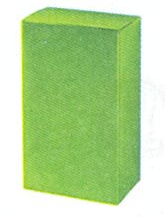 The volume of a rectangular box is $40 \text{ cm}^3$. What are two possible sets of dimensions of the box given that they are all whole numbers?
Possible last digits:
Answer:
Pair:
章末概念检查 · Concept Checkpoints
5 道封闭题,自动判分。这些题会进入跨章节复习池——后面学 HCF / LCM 之前会重新弹出,确保你掌握 1.1 的核心。